The buyers of your impact have changed. Most organisations have not.
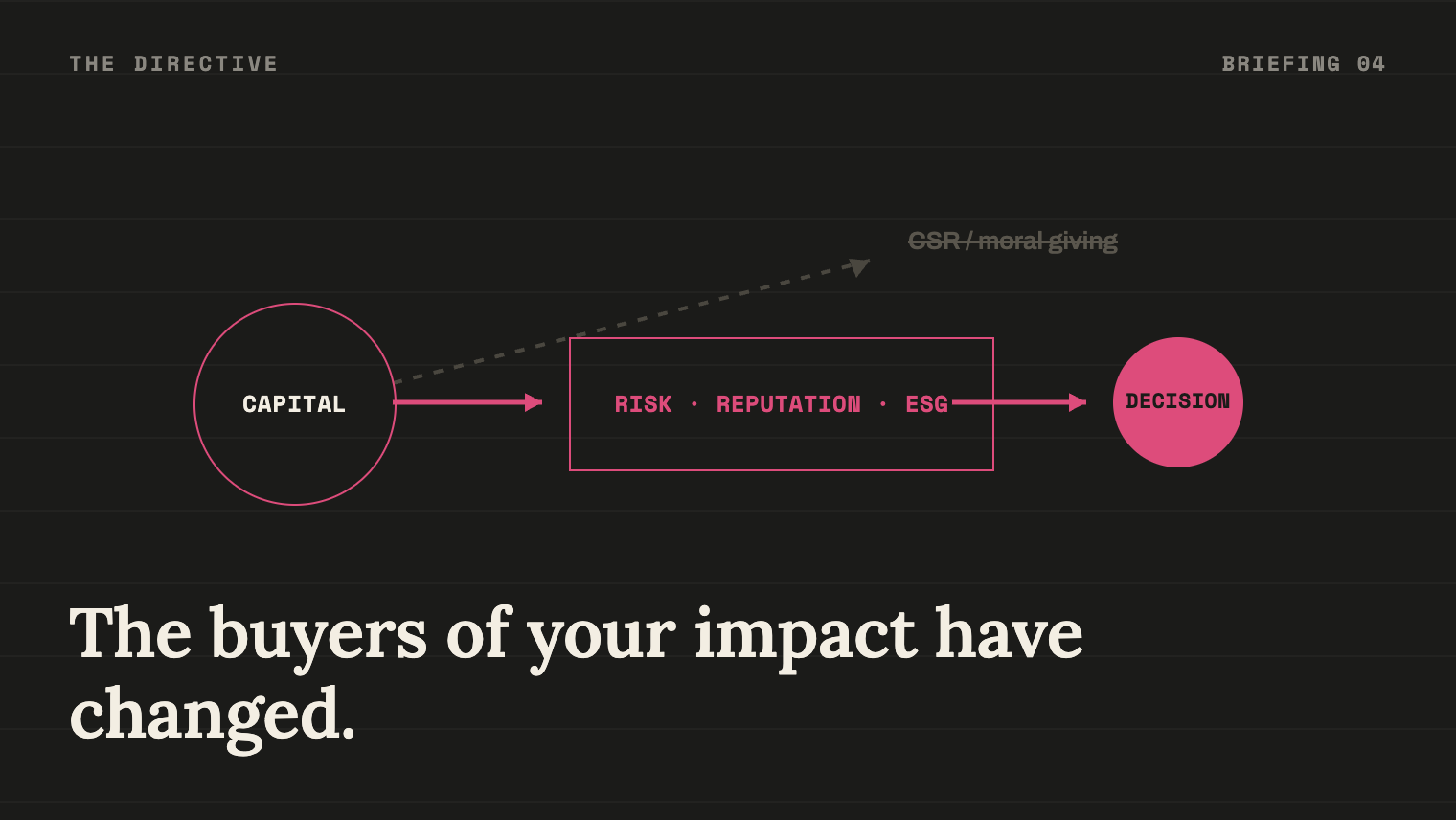
Corporate capital allocated to social impact is no longer primarily controlled by CSR officers writing cheques against a moral narrative. It is increasingly filtered through corporate affairs, risk, communications, and ESG functions whose primary mandate is reputational security and stakeholder trust.
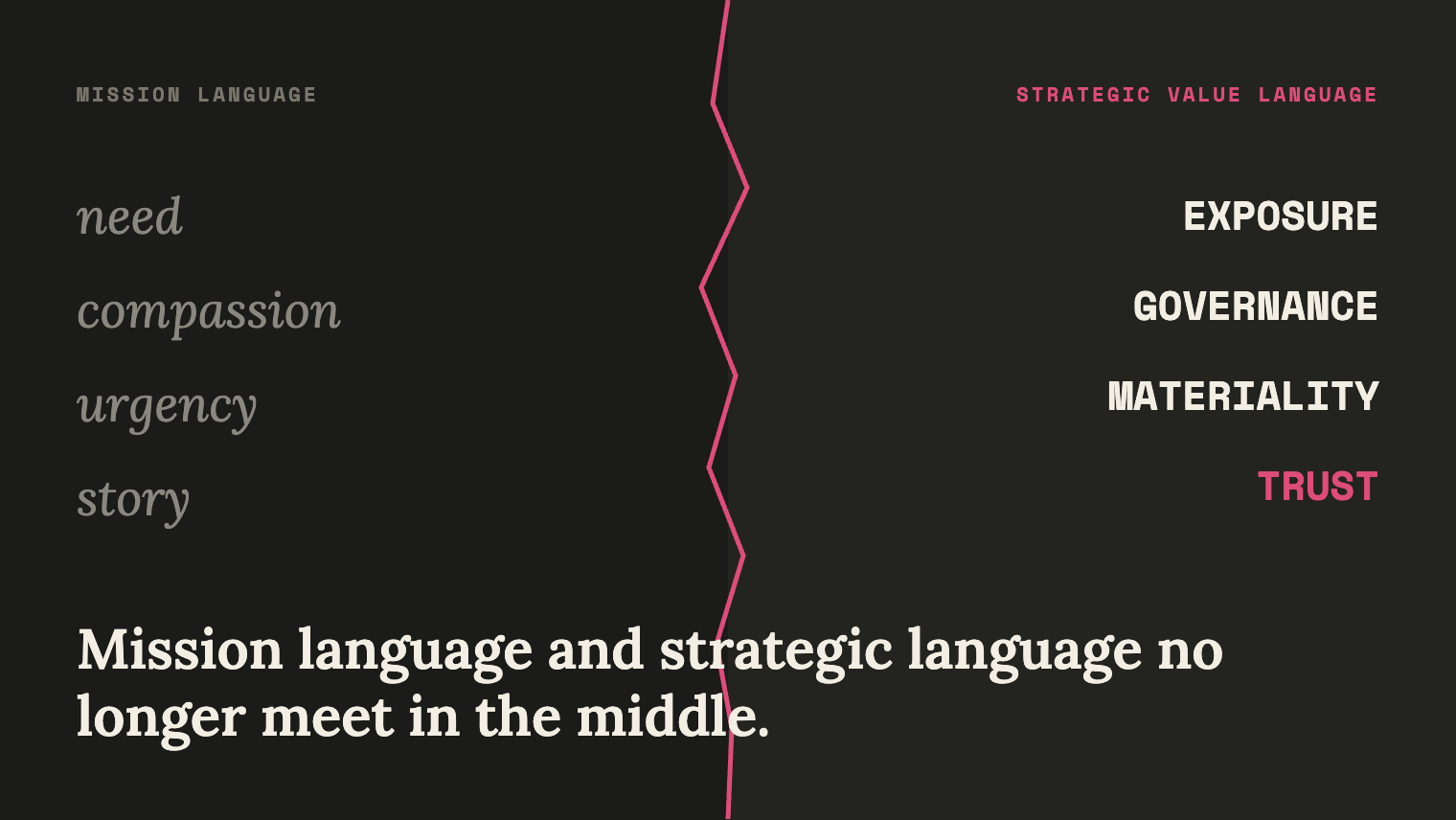
The organisations still speaking the language of pure need are talking past the people who now control the capital.
This is not a temporary tightening. It is a structural realignment in how corporate decision-makers evaluate external partnerships. The moral weight of a cause remains necessary. It is no longer sufficient.
What the shift actually looks like inside the buyer
Philanthropic governance inside major corporations has been absorbed, in many cases, by the same functions that manage brand risk and public affairs. The questions those teams ask are different from the ones traditional CSR officers asked five years ago.
They are listening for:
- Risk mitigation and reputational insulation
- Demonstrable contribution to brand equity and stakeholder trust
- Evidence that can be used in their own reporting and external communications
- Partners who reduce, rather than increase, exposure
Organisations that continue to lead with deficit narratives and urgency appeals are answering a brief that no longer exists in the rooms that matter.
Four pressure points that follow
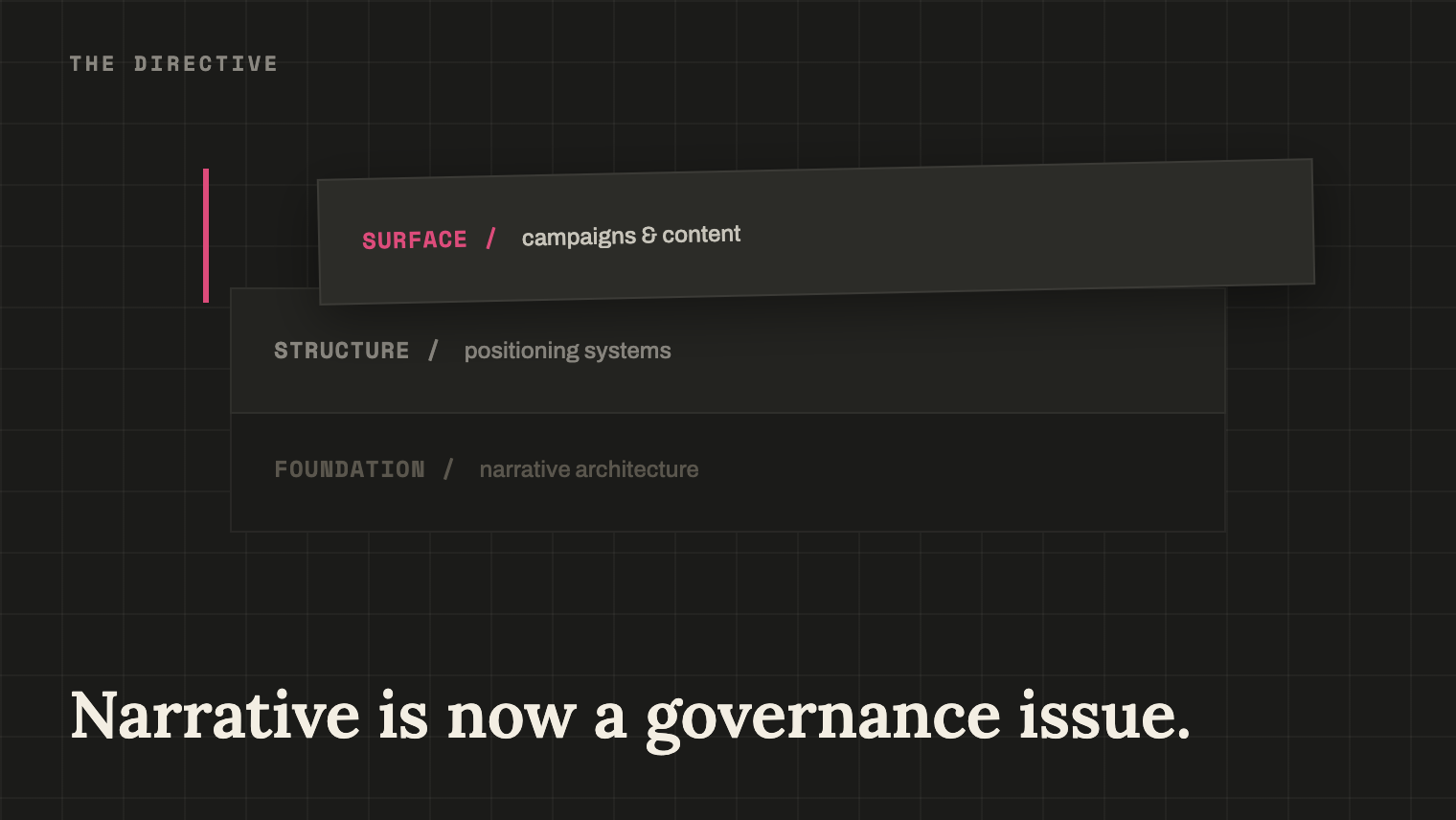
1. Narrative architecture is now a governance issue
Most organisations are still running messaging designed for an earlier funding environment. External communications, pitch materials, and digital presence often remain oriented around need rather than strategic value. The misalignment is not stylistic. It is structural: the organisation is presenting itself as a recipient of goodwill while the buyer is evaluating it as a potential partner in reputation and risk management.
The practical consequence is that strong programmes are being filtered out before the quality of the work is even assessed.
2. Repositioning is happening, but often without governance
A meaningful share of mission-driven organisations are currently in some form of rebrand or mission repositioning. Too many of these processes are treated as marketing exercises rather than organisational pivots. Without board-level ownership and multi-stakeholder alignment, the result is frequently mission drift, internal confusion, and a new narrative that competitors can easily copy.
The organisations that emerge stronger are those that treat repositioning as a strategic evolution anchored in demonstrable, hard-to-replicate expertise.
3. Impact reporting has become an unfunded tax
Corporate partners increasingly expect high-production, bespoke impact materials that feed their own PR and ESG machinery. This demand is rarely accompanied by funding for the administrative and creative overhead it creates. Programme staff are pulled into custom reporting cycles that drain capacity from delivery.
The organisations absorbing this cost without redesigning their content systems are subsidising corporate communications at the expense of their own work.
4. The decision-makers have moved
The people evaluating partnership proposals are often no longer the traditional CSR leads. They sit in corporate affairs, communications, risk, and C-suite functions. Development and executive teams that continue to pitch exclusively to the old buyer are speaking to the wrong room.
Impact that cannot be articulated as brand insurance and stakeholder-trust infrastructure is increasingly difficult to sell into these new centres of decision-making.
The operational implication
Mission remains non-negotiable. The methodology for securing the capital that funds it does not.
Organisations that continue to communicate like traditional charities will find the capital available to them shrinking. Those that rebuild their narrative architecture, governance of positioning, content systems, and partnership approach around the actual incentives of modern corporate capital will be the ones that scale.
The gap is not primarily one of programme quality. It is one of translation: between the language of mission and the language of strategic value as currently defined by the people who control the resources.
That translation is now a leadership function, not a communications afterthought.
---
Bold Cause works with mission-driven leadership teams on the narrative, positioning, and partnership architecture this environment requires. If the diagnosis above maps to pressure points inside your organisation, the conversation starts here.
'%2F%3E%0A%20%20%20%20%20%20%3Ctext%20x%3D'50%25'%20y%3D'52%25'%20text-anchor%3D'middle'%20font-family%3D'Helvetica%2CArial%2Csans-serif'%0A%20%20%20%20%20%20%20%20font-weight%3D'700'%20font-size%3D'64'%20fill%3D'%23EE3355'%20letter-spacing%3D'2'%3EBOLD%20INSIGHT%3C%2Ftext%3E%0A%20%20%20%20%3C%2Fsvg%3E)